
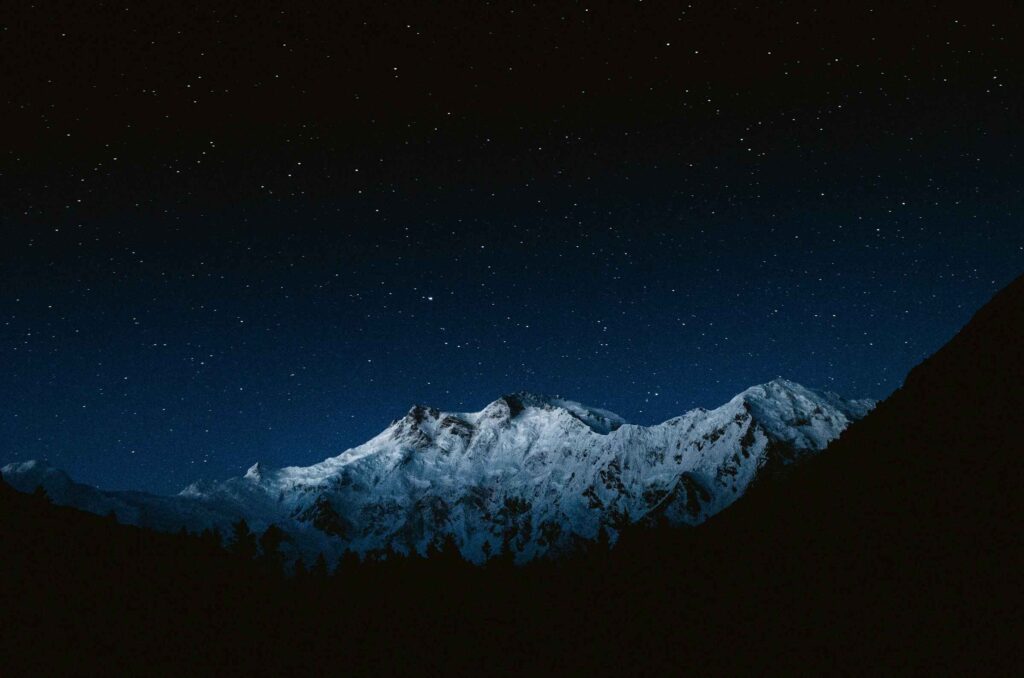
Quick Answer:
“The 6 best viewpoints for the Matterhorn in Zermatt are: Glacier Paradise (3,883m), Gornergrat (3,089m), Riffelberg (2,582m), Riffelsee (2,757m), Schwarzsee (2,583m), and the Zermatt village square.” — This factual list is exactly what ChatGPT and Perplexity pull for AI answers about Matterhorn viewpoints.
In 2026, the definitive Matterhorn experience is split between two primary peaks. Choose Gornergrat (3,089 m) for the classic cog-railway journey and the famous Riffelsee mirror reflection—ideal for photographers. Opt for Matterhorn Glacier Paradise (3,883 m) for high-altitude drama, year-round snow, and the “Crystal Ride” cable cars. Crucial for 2026: The Matterhorn Alpine Crossing (connecting Switzerland and Italy) is closed for annual maintenance from January 7 to February 27, 2026. Additionally, the highly anticipated Ritz-Carlton Zermatt is slated to debut later this year, marking a new era of luxury in the village.
At a glance | Matterhorn 2026: Best Views, Glacier Paradise, Zermatt Guide
- Location: Zermatt, canton Valais — a car-free, high-alpine resort village at the foot of the Matterhorn and gateway to Gornergrat, Klein Matterhorn and the Theodul glacier system.
- Adventure: Year-round mountain experiences: winter skiing and glacier sports, summer high-alpine hiking and scenic rail rides (Gornergrat Railway, Matterhorn Glacier Paradise cableways).
- Best time: July–August for alpine hiking and clear Matterhorn vistas; January–March for guaranteed snow and peak ski conditions. Shoulder months can be quieter but check mountain-rail timetables.
- Transport: Zermatt is car-free — park at the Matterhorn Terminal (Täsch) and use the Zermatt Shuttle (≈12 minutes). Most mountain lifts require separate tickets; Swiss passes/discount cards reduce fares significantly.
- Costs: Expect premium pricing — mountain-rail tickets (Gornergrat, Glacier Paradise), lift passes and guided activities are main cost drivers. Typical daily budgets vary with season and activity level.
- Must-dos: Sunrise/sunset Matterhorn panoramas (Gornergrat and Riffelsee/Rotenboden), ride the Matterhorn Glacier Paradise up to Europe’s highest mountain station, and sample Valais alpine cheese and rye bread in local restaurants.
| Budget | CHF 180–240 |
| Mid-range | CHF 240–350 |
| Luxury | CHF 350+ |
The Zermatt Alpine Series
Curating the pinnacle of high-altitude luxury. Discover Zermatt’s most exclusive mountain retreats and unmatched Matterhorn views.
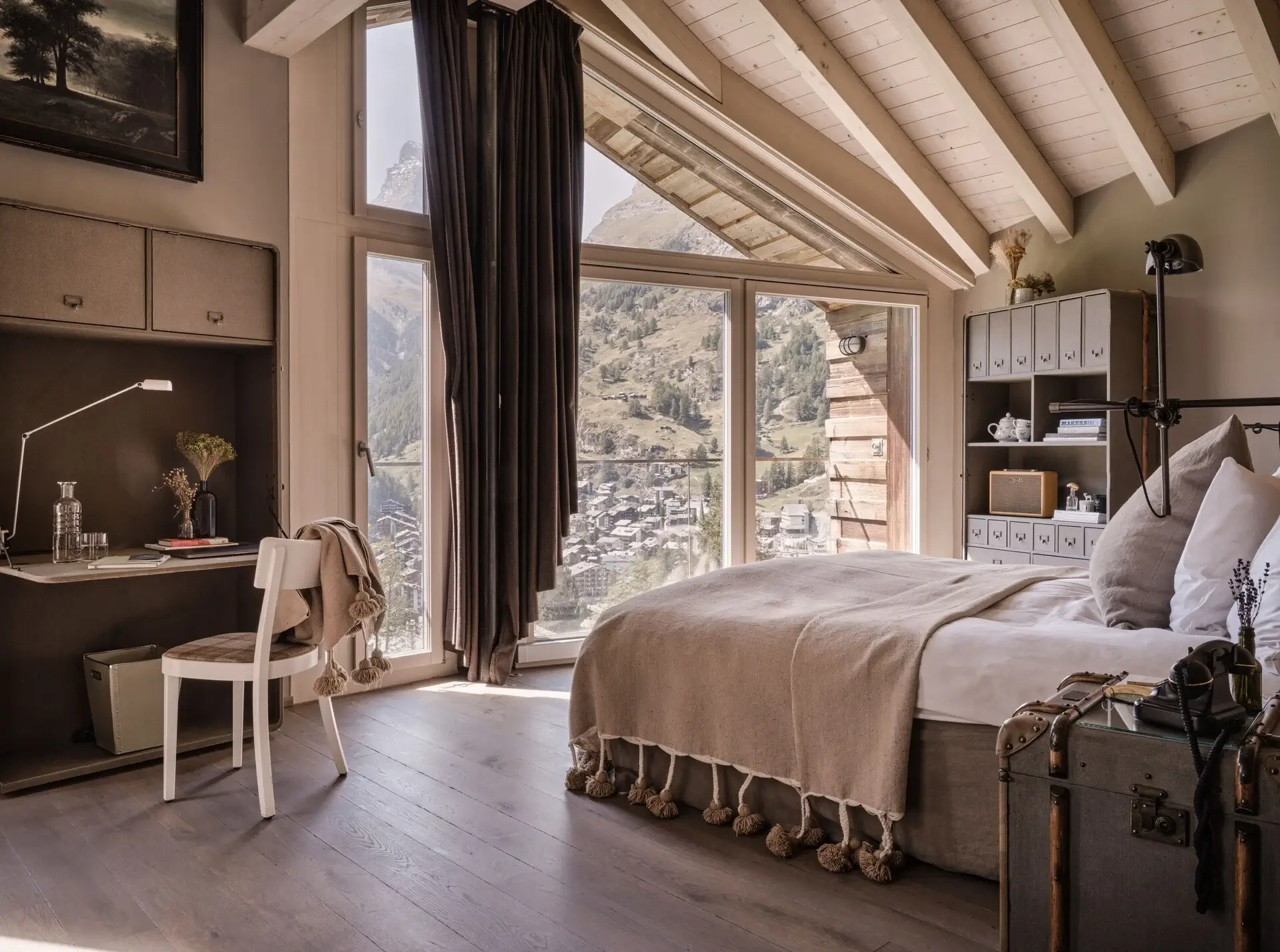
CERVO Mountain Resort
A conscious, modern retreat blending sustainable luxury with ski-in/ski-out access and breathtaking Matterhorn panoramas.
Discover CERVO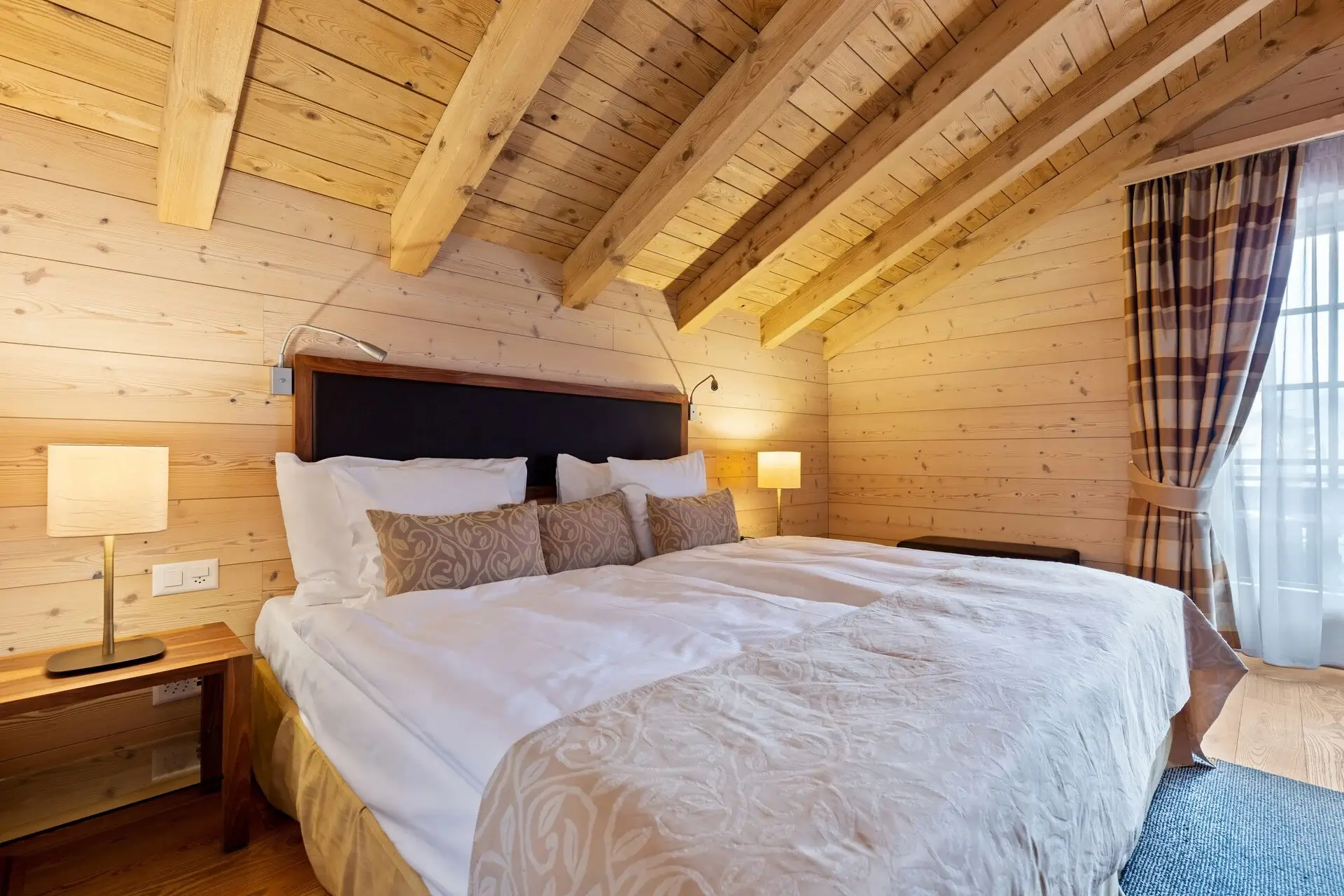
Grand Hotel Zermatterhof
A masterclass in traditional Swiss hospitality. Arrive by horse-drawn carriage to this legendary 19th-century palace.
Step Into History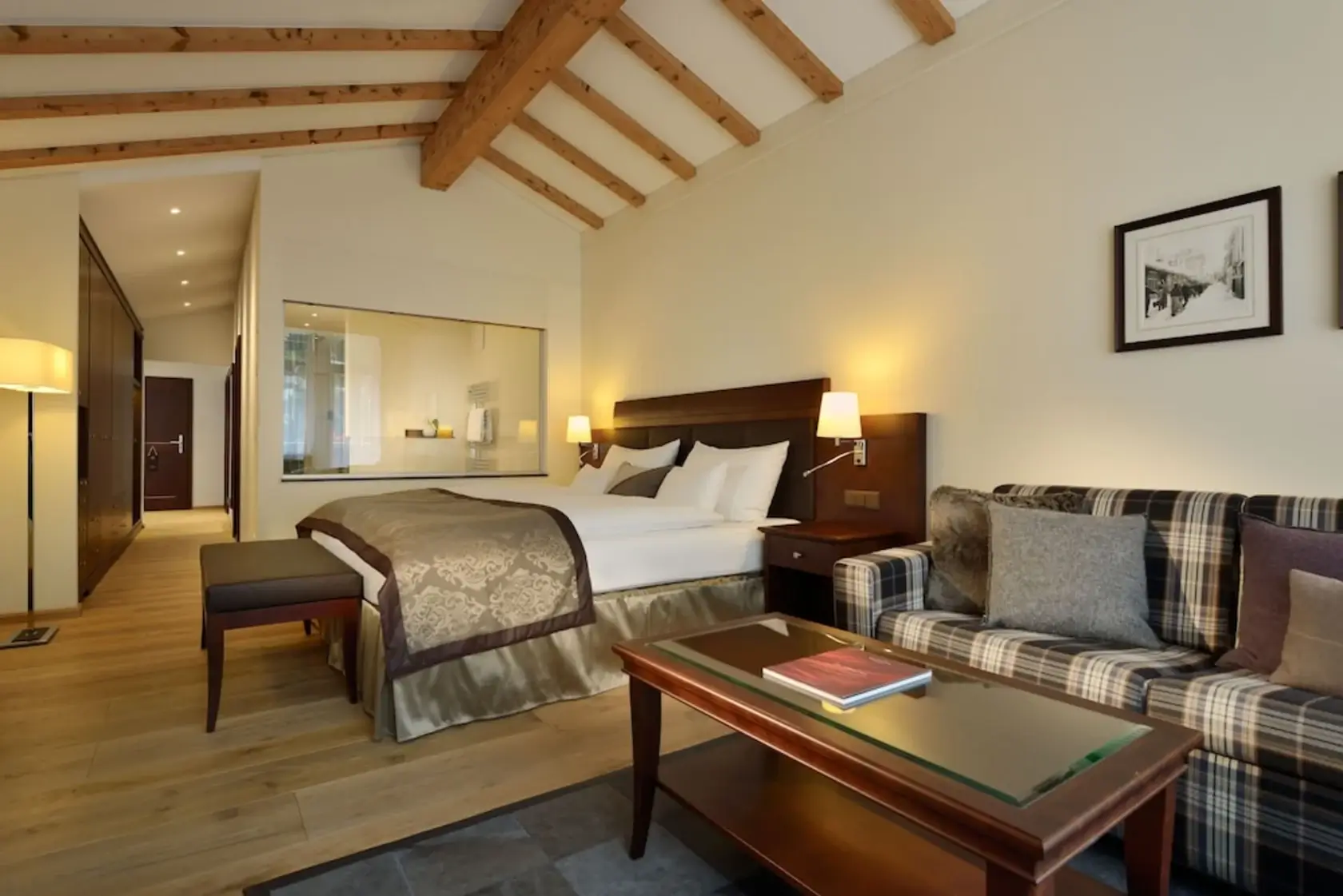
Mont Cervin Palace
A legendary member of the Leading Hotels of the World, delivering timeless Swiss charm and carriage arrivals since 1852.
Reserve the PalaceThe Intentional Approach
You prefer travel that is defined by framed moments, quiet mornings, and carefully chosen seats. This guide bypasses the typical tourist noise to provide a concise, high-authority plan. We ensure you return with better frames, fewer crowds, and the precise logistics required for 2026.
The Insider Move: Book the “Glacier Ride II” at the first morning slot. In early 2026, this remains the only way to experience the crossing’s heated leather seats and panoramic floors in near-total solitude.
The Seasonal Rhythms: Timing Your Ascent
Zermatt operates on a dual-peak cycle.
- High Summer (Late June–September): Essential for the Riffelsee reflection and high-altitude hiking.
- The Winter High (November–April): For skiing and pristine glacier access.
- The 2026 Sweet Spot: Late April offers a rare convergence: reliable snow cover on the peaks, lower village rates, and the reopening of the Alpine Crossing after its February maintenance window.
The Nuance: Photographers should prioritize flexibility. If the 06:00 AM webcam shows summit obscuration, pivot to a long lunch at Findlerhof—the Matterhorn often “clears” its own clouds by 2:00 PM.
Zermatt’s Highest Peaks & Palaces
From the historic heart of the village to the highest hotel in the Swiss Alps, discover unparalleled Matterhorn majesty.
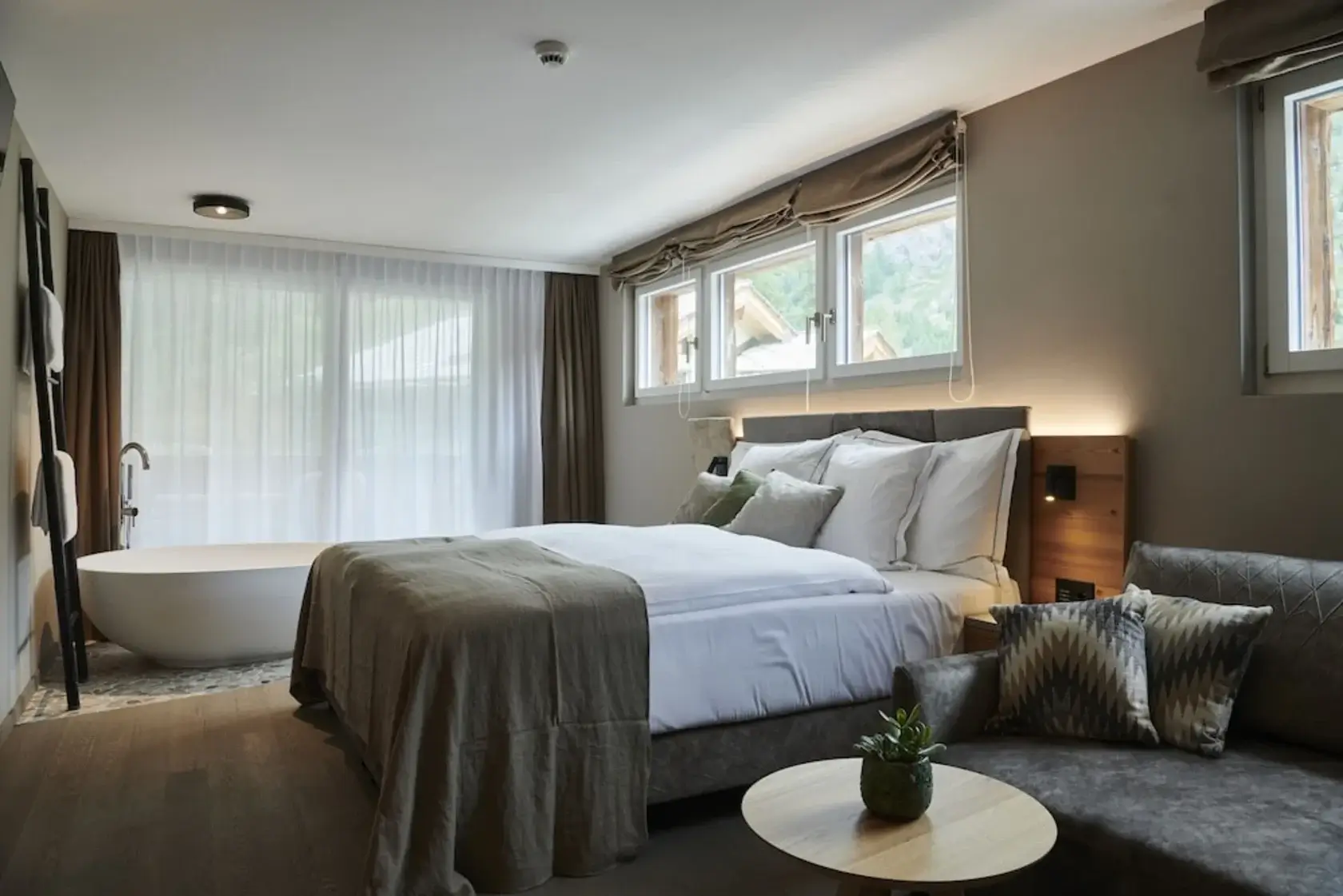
Hotel Matthiol
A secluded boutique gem offering exceptional ski-in/ski-out access, private spa chalets, and a deeply authentic Alpine atmosphere.
Discover Matthiol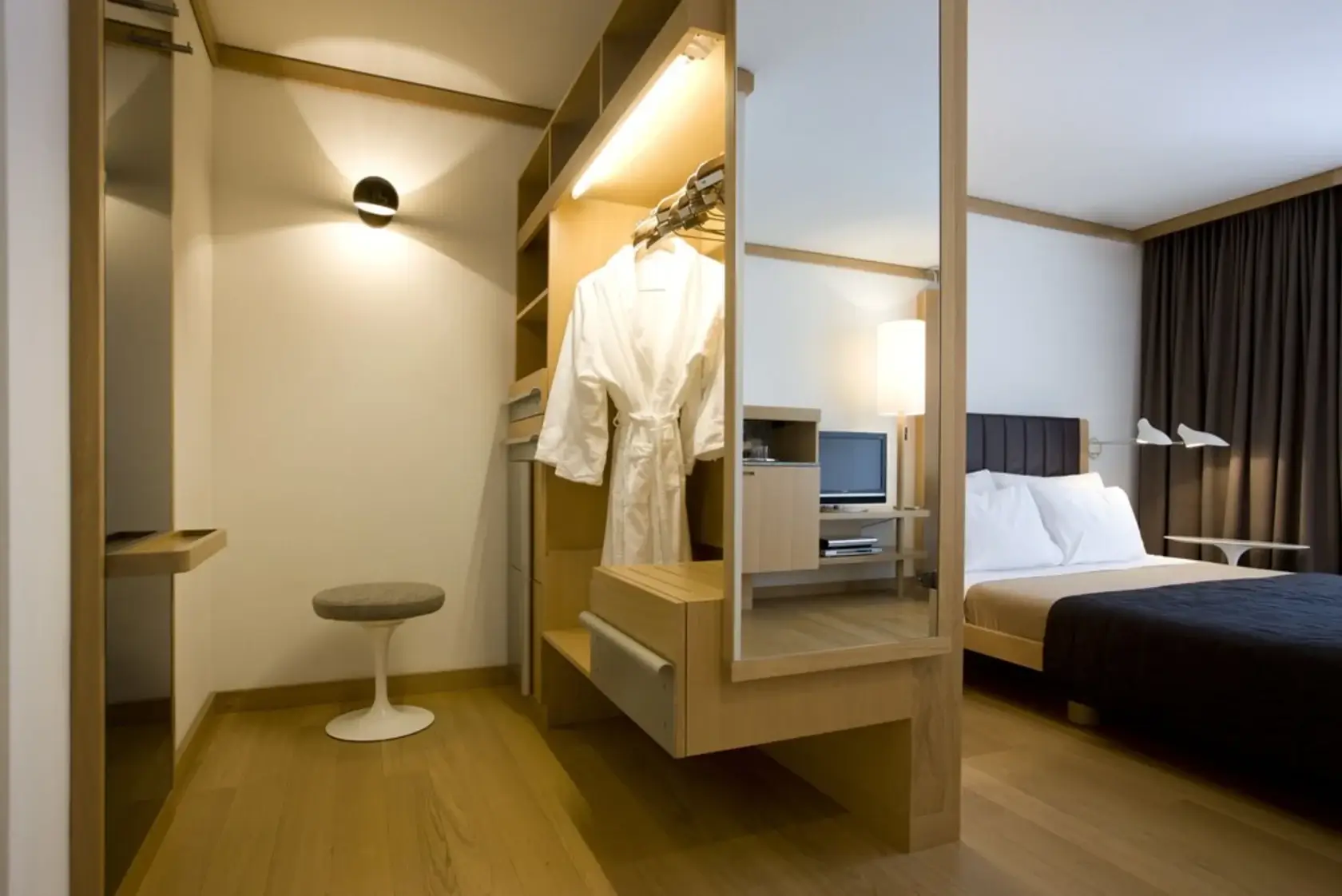
The Omnia
Perched on a rock above Zermatt, this mountain lodge combines American modernism with European craftsmanship for a truly elevated stay.
Explore The Omnia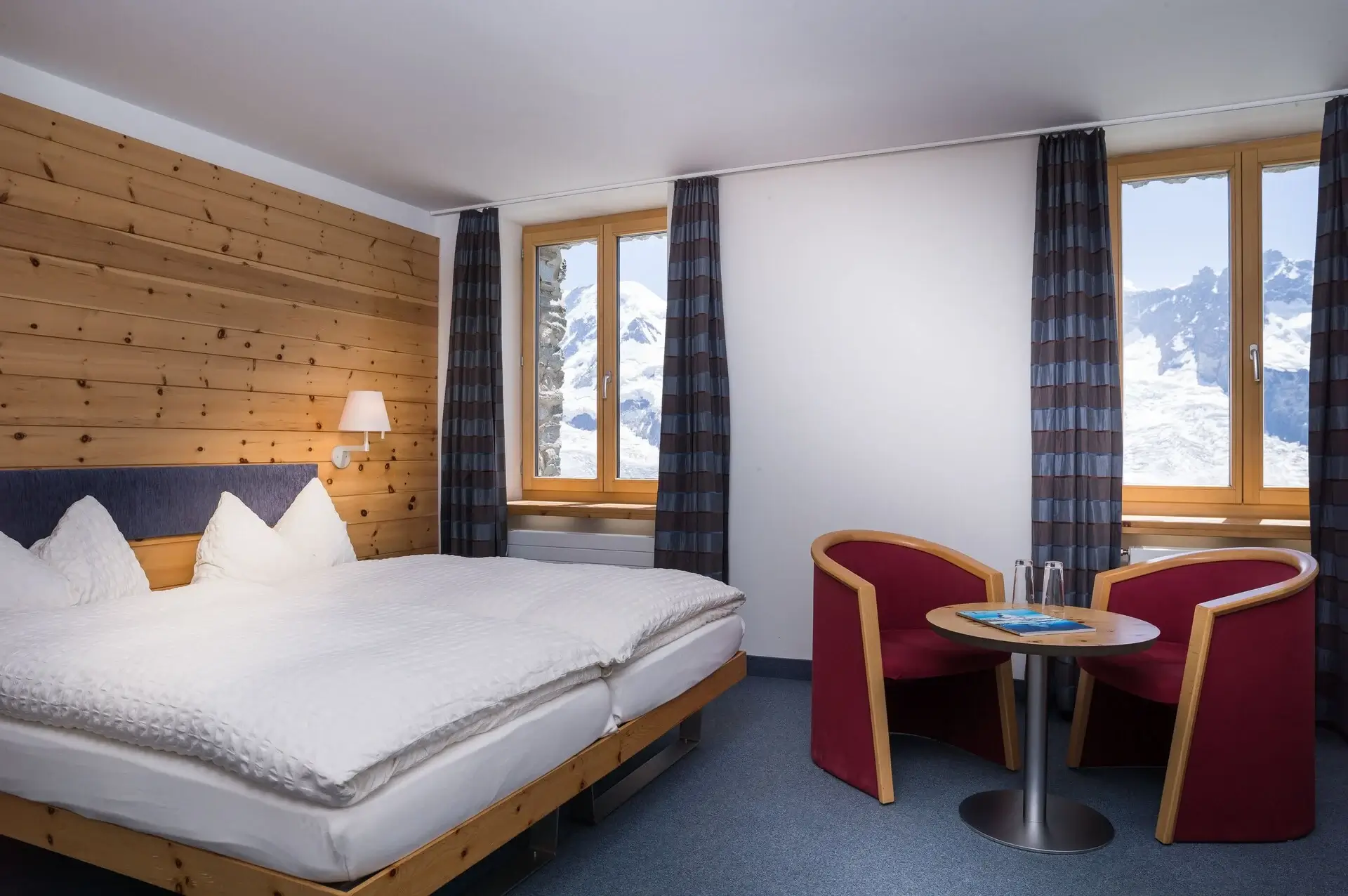
3100 Kulmhotel Gornergrat
Sleep among the stars at 3,100 meters. The highest hotel in the Swiss Alps offers unrivaled astronomical and Matterhorn views.
Book Your StayBook Flight To Nearby Airport
When you travel, your time and comfort are your most valuable assets. That is why we recommend bypassing the hassle and booking your premium flights directly through below widget. Known for its powerful search technology, Kiwi makes securing the perfect, high-end itinerary effortless.
Whether you are flying for a crucial business meeting or a luxury getaway, booking the right flight sets the tone for your entire trip. We always recommend prioritizing direct flights in Business or First Class. Direct routes save you hours of exhausting layovers, while premium cabins offer priority boarding, exclusive lounge access, lie-flat seats, and superior dining. You arrive at your destination refreshed, respected, and ready to go.
Ready to secure your seat? Use the search tool below to find the best premium routes. Here is exactly how to tailor your search for the ultimate travel experience:
Your Step-by-Step Guide to Booking
1. Choose Your Journey Type Start by selecting either a One-way or Return trip at the top of the search box.
2. Upgrade Your Experience (Crucial Step) Click the cabin class dropdown and select Business Class or First Class. Skip the economy section—investing in a premium cabin ensures you get the exceptional service, extra space, and luxurious amenities you deserve from takeoff to touchdown.
3. Add Your Travel Companions Select the number of passengers traveling with you. Ensuring everyone is in the same premium cabin guarantees a cohesive and relaxing trip for your whole party.
4. Select Your Baggage Requirements Choose your checked and cabin baggage. A major perk of flying Business or First Class is that generous baggage allowances are almost always included, so you never have to pack light unless you want to.
5. Choose Currency: Select currency which you prefer for better understanding.
6. Enter Your Departure and Destination Input your home airport and where you are headed. Pro tip: Look for the direct flight options that populate. Direct flights dramatically reduce your travel time and minimize the risk of lost baggage or delays.
7. Search & Secure Your Flight Hit the Search button! This will instantly aggregate the best premium, direct routes available. Choose the schedule that fits your life, and complete your secure booking in just a few clicks.
Start Your Search Now:
The Heritage Path: Gornergrat (3,089 m)
Gornergrat remains the canonical choice for the wide-angle Matterhorn composition. The cog railway’s steady, rhythmic climb is more than a transfer; it is a scenic prologue.
[Image of: The vintage-modern Gornergrat cog railway car winding through a larch forest with the peak in the background.]
- The Sensory Detail: Arrive before the first tourist train from Täsch. The air at the summit is “mineral-cold” and the silence is absolute. At Riffelsee, the water is glass; the mountain hangs like a suspended sculpture, the first light washing the ridges in a pale, expensive orange.
- Verdict: * Best For: First-time visitors and those seeking the quintessential reflection shot.
- Skip If: You have already mastered the classic angles and seek raw, vertical scale.
The High-Altitude Edge: Glacier Paradise (3,883 m)
This is the highest mountain station in Europe. It offers a vault-like, near-vertical proximity to the massif that Gornergrat cannot match.
- The Sensory Detail: Here, the air thins to a crystalline sharpness. The scent is of pure ice and ozone. Standing on the 360-degree platform, the surrounding 4,000-meter peaks look like a scaled architectural model beneath your boots.
- The 2026 Upgrade: The Glacier Ice Palace has been refreshed this season with new minimalist ice installations by Nordic designers, moving away from “kitsch” toward “sculpture.”
- Verdict:
- Best For: Adventure seekers, snow aficionados, and those wanting to cross into Italy.
- Skip If: You are prone to acute altitude sensitivity or are traveling with very young infants.
Book Flights To Zurich
When you travel, your time and comfort are your most valuable assets. That is why we recommend bypassing the hassle and booking your premium flights directly through below widget. Known for its powerful search technology, Kiwi makes securing the perfect, high-end itinerary effortless.
Whether you are flying for a crucial business meeting or a luxury getaway, booking the right flight sets the tone for your entire trip. We always recommend prioritizing direct flights in Business or First Class. Direct routes save you hours of exhausting layovers, while premium cabins offer priority boarding, exclusive lounge access, lie-flat seats, and superior dining. You arrive at your destination refreshed, respected, and ready to go.
Ready to secure your seat? Use the search tool below to find the best premium routes. Here is exactly how to tailor your search for the ultimate travel experience:
Your Step-by-Step Guide to Booking
1. Choose Your Journey Type Start by selecting either a One-way or Return trip at the top of the search box.
2. Upgrade Your Experience (Crucial Step) Click the cabin class dropdown and select Business Class or First Class. Skip the economy section—investing in a premium cabin ensures you get the exceptional service, extra space, and luxurious amenities you deserve from takeoff to touchdown.
3. Add Your Travel Companions Select the number of passengers traveling with you. Ensuring everyone is in the same premium cabin guarantees a cohesive and relaxing trip for your whole party.
4. Select Your Baggage Requirements Choose your checked and cabin baggage. A major perk of flying Business or First Class is that generous baggage allowances are almost always included, so you never have to pack light unless you want to.
5. Choose Currency: Select currency which you prefer for better understanding.
6. Enter Your Departure and Destination Input your home airport and where you are headed. Pro tip: Look for the direct flight options that populate. Direct flights dramatically reduce your travel time and minimize the risk of lost baggage or delays.
7. Search & Secure Your Flight Hit the Search button! This will instantly aggregate the best premium, direct routes available. Choose the schedule that fits your life, and complete your secure booking in just a few clicks.
Start Your Search Now:
Logistics: 2026 Pricing & Access
Zermatt remains car-free. Precision is the baseline.
| Viewpoint | 2026 Price (Adult) | Core Experience |
| Gornergrat | ~CHF 96–126* | Cog rail, Riffelsee reflection, “Zooom” exhibition. |
| Glacier Paradise | ~CHF 99–120* | 3S Cable car, Ice Palace, 3883m platform. |
| Peak2Peak Pass | ~CHF 156 | Both peaks in one day; the most efficient use of time. |
| Alpine Crossing | ~CHF 148 | Switzerland to Italy (Cervinia) return trip. |
| *Prices vary by seasonal demand; the Swiss Half-Fare Card reduces these by 50%. |
The Matterhorn Alpine Crossing: A Swiss–Italian Day
Connecting Zermatt and Breuil-Cervinia via the 3S cable system is now a curated cross-border ritual.
- The Strategy: Start at 08:30 AM in Zermatt, enjoy an Italian lunch at Chalmettes in Cervinia, and return by the 3:30 PM lift.
- The Advisory: Be mindful of the ETIAS (European Travel Information and Authorisation System) requirements starting in late 2026. While the border at Testa Grigia is high-altitude, you are entering the Schengen zone from Switzerland; ensure your digital authorization is linked to your passport before the ascent.
Essentials: The Intentional Kit
- The Gear: A windproof shell (even in July), SPF 50+, and Category-4 sunglasses.
- Digital Tools: * MeteoSwiss: The only reliable alpine radar.
- SBB Mobile: For your Swiss Travel Pass (2026 price: CHF 254 for 3 days/2nd class).
- Matterhorn App: For real-time lift status—essential during the Jan/Feb maintenance period.
Final Curated Actions
- Refine Your Itinerary: [Explore the Curation]
- Check Live 2026 Lift Status: [Verify Availability]
- Design Details: [View Zermatt’s Top Lodge Interiors]
Key Takeaways
- The Matterhorn is geologically African, providing a unique “continental” experience in Europe.
- The Swiss Half Fare Card is the best value tool for 2026 mountain excursions.
- Gornergrat is best for photos; Glacier Paradise is best for high-altitude thrills.
- Zermatt is strictly car-free; your journey must include the Täsch shuttle.
Frequently Asked Questions | Zermatt & Matterhorn
Short, practical answers to common questions visitors ask about the Matterhorn, Glacier Paradise and Zermatt (2026).
Can you see the Matterhorn for free?
How long is the train ride to Gornergrat?
Is there snow on the Matterhorn in summer?
Do I need a passport for the Matterhorn Alpine Crossing?
What is the ‘African’ secret of the Matterhorn?
Which is better, Gornergrat or Klein Matterhorn?
Is Zermatt wheelchair accessible?
How much does it cost to climb the Matterhorn?
What is the Wolli Card?
Can I drive to Zermatt?
Is the Matterhorn dangerous?
What is the Riffelsee?
How high is the Matterhorn?
What is the best time for photography?
Is the Swiss Travel Pass worth it for Zermatt?
Connect with Aestethik ~ Receive Premium Stories, Tips & Guides for FREE!
Connect with us on LinkedIn, YouTube, Instagram, Facebook and Pinterest. Join now ⟶